Watts Bar Lake
A 39,000-acre Tennessee Valley Authority reservoir on the Tennessee River. It runs 72 miles, has 722 miles of shoreline, and backs slack water more than 20 miles up the Clinch River and 12 up the Emory.
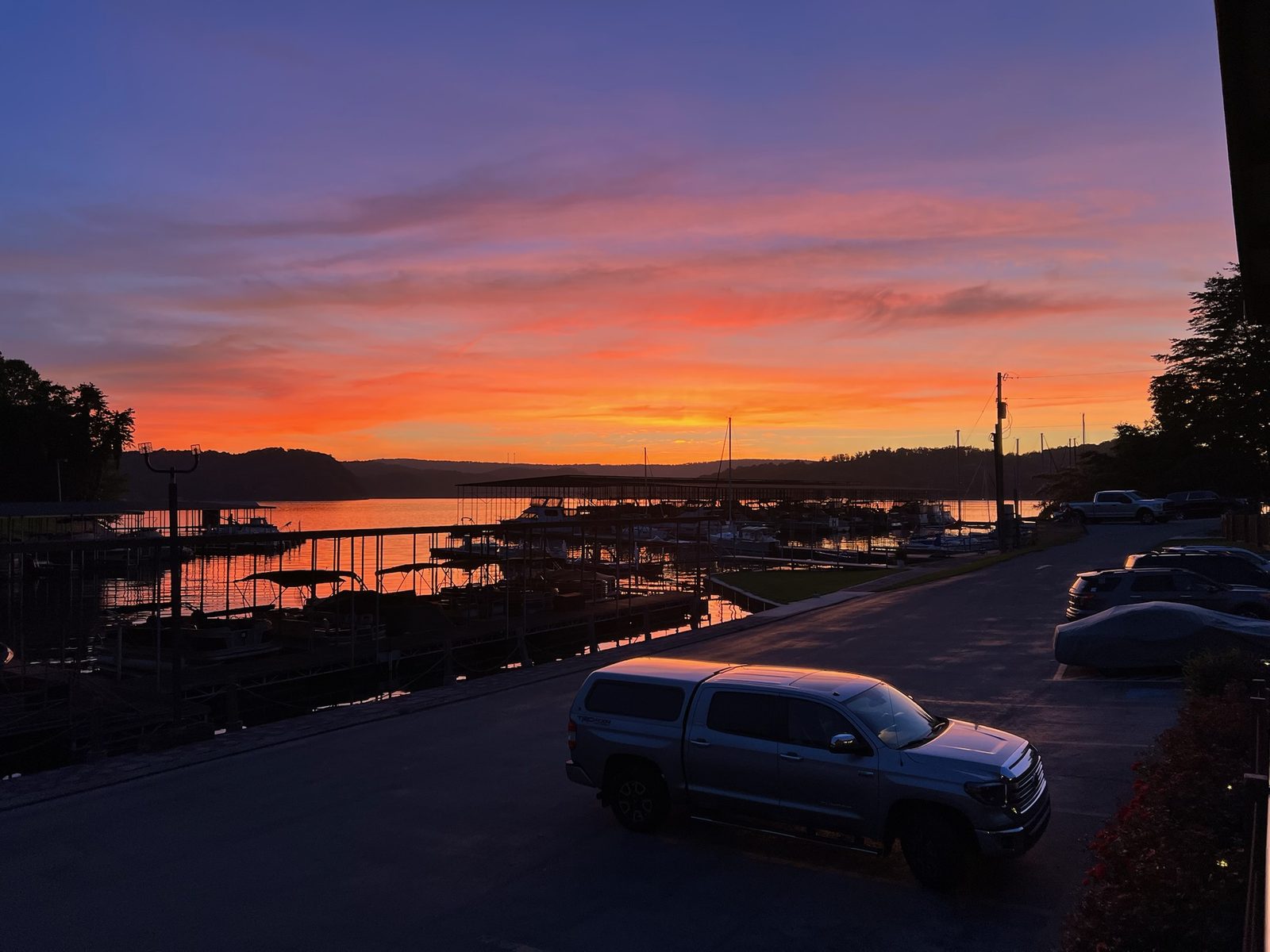
The basics
Watts Bar Lake (sometimes "Watts Bar Reservoir") was completed in 1942 when the Tennessee Valley Authority closed Watts Bar Dam at Tennessee River Mile 529.9. The reservoir backs water 72.4 miles upstream to Fort Loudoun Dam, covering about 39,090 acres at summer pool. Its 722-mile shoreline winds through Roane, Meigs, Rhea, and Loudon counties in eastern Tennessee. Source numbers are from TVA and TVA's reservoir profile.
| Type | Main-stem Tennessee River impoundment |
|---|---|
| Year completed | 1942 |
| Surface area | ~39,090 acres at summer pool |
| Length | 72.4 miles (Watts Bar Dam to Fort Loudoun Dam) |
| Shoreline | 722 miles |
| Summer pool | 740–741 ft above sea level |
| Winter minimum | 735 ft (typical drawdown 5–6 ft) |
| Top of gates | 745 ft |
| Operator | Tennessee Valley Authority (TVA) |
| Tributary slack-water | 20+ miles up the Clinch River, 12 miles up the Emory |
| Counties | Roane, Meigs, Rhea, Loudon |
How the lake operates
TVA fills the reservoir for summer recreation between June 1 and Labor Day, then begins drawdown on November 1 toward the 735-foot winter minimum. Because Watts Bar is a main-stem reservoir, it fluctuates less than tributary lakes; TVA uses it primarily for navigation, hydropower, and flow management rather than flood storage. Release schedules update throughout the day. Predicted elevations refresh at least daily on TVA's lake-levels page.
Watts Bar Dam houses five generators. About 60 miles upstream, Fort Loudoun Dam houses four. When either is generating, the change shows up downstream within hours, and it matters to anyone fishing current breaks or boating near the dam. TVA explains that the system is operated as a whole, so flow on Watts Bar can change to satisfy downstream needs at Chickamauga or Kentucky.
The six lake regions
Locals don't navigate Watts Bar by mailing address. They navigate by where the water bends. The six zones below describe how the lake behaves in practice. The right region depends on what you're trying to do.
Kingston / Clinch-Emory confluence (TRM 556–575)
The most public-access-friendly stretch of the lake. Kingston City Park has multi-lane ramps and a courtesy dock. Fort Southwest Point sits on the bluff above the confluence. Long Island Marina is just off-channel. Good fit for a first-time launch, July 4 fireworks, or shore fishing. Full breakdown on the Kingston region page.
Rockwood / Eagle Furnace (TRM 550–556)
The north-shore corridor: Caney Creek, Whites Creek, Tom Fuller Park, Roane County Park. More residential and functional than flashy, with strong support for locals, anglers, and RV users. Caney Creek Marina and Rockwood Marina & RV Resort serve this side. Rockwood region page.
Mid-lake (Ten Mile / Blue Springs / Euchee, TRM 540–550)
The lake's social and service core. Blue Springs Marina is the largest on the lake. Euchee Marina Resort, Bayside, and Terrace View round out the dock-and-dine corridor. The best all-around boating zone for fuel, repairs, lunch, sunset dinner, and live music within a short cruise. Mid-lake region page.
Spring City / Piney River (TRM 532–540)
South-shore family-resort, cabin, and campground territory. Rhea Springs Recreation Area pairs a public swim beach with a ramp and pier. Spring City Resort & Marina anchors the lower-lake fuel base. The Piney embayment offers calmer water than the main channel, which matters when wind blows out the open lake. Spring City region page.
Lower lake / Watts Bar Dam (TRM 529–532)
The forebay and operations zone. Scenic but operationally sensitive. Generation, lock turbulence, and posted hazard zones make this a safety-first region for casual boaters; TVA's hazardous-waters guidance covers the rules. The safety page has the practical version. Lower lake region page.
Upper riverine (TRM 575–601, plus Clinch / Emory arms)
The upstream reaches. The Tennessee River main channel runs north toward Fort Loudoun Dam at TRM 601, with more river character, fewer dense resort nodes, and the lake's quietest cruising water. Tennessee National Marina at mile 583 is the upper-end fuel anchor on the main channel. The Clinch arm leaves the lake at Kingston and runs northeast through Oak Ridge and Clinton toward the Norris Dam tailwater; the Emory arm runs north and west toward Harriman. Upper riverine region page.
Fish and fishing
Watts Bar is a productive multi-species lake. The fishing pages cover largemouth, smallmouth, spotted, crappie, bluegill, catfish, and striped bass with seasonal patterns and zone-by-zone recommendations. In short: largemouth dominate mid-lake brush and grass; smallmouth favor lower-lake rock and the Fort Loudoun tailwater; crappie work creek backs in spring and deep brush in summer; striped bass move from Kingston upstream in spring and toward Rockwood and White's Creek in fall. The species detail comes from TWRA's reservoir profile and public tournament coverage from Major League Fishing.
One fish-consumption note: TDEC's published advisory flags catfish, striped bass, and hybrid striped-white bass in the Tennessee River between Watts Bar Dam and Fort Loudoun Dam, with precautionary limits on several other species and stricter rules in the Poplar Creek embayment. Verify the current list at the TDEC advisories page before keeping any. The safety page has the full breakdown.
Wildlife and ecology
The most recent TVA reservoir-health monitoring rated Watts Bar's overall ecological condition "fair," with the fish indicator rated "good" at the forebay and mid-reservoir. The lake supports active wildlife management areas: Watts Bar WMA includes Long Island and Thief Neck Island, and Paint Rock Refuge sits along the upper river. Bald eagles nest along the shoreline. Great blue heron rookeries are visible from the water. The Piney embayment carries strong waterfowl activity in winter.
History
Before impoundment, the Tennessee River through this stretch was a working commercial waterway with shoals and seasonal navigation problems. Watts Bar Dam was built between 1939 and 1942 as part of TVA's New Deal-era reservoir system, designed for hydropower, navigation, and flood control. The completed reservoir submerged farms, cemeteries, and the original town of Loudon's lower district. Fort Southwest Point at the Kingston confluence is a reconstructed 1797 frontier fort. It's the lake's most accessible historical site by car, and one of the better bluff overlooks above the water.
Visiting
The road geography is awkward. I-40 crosses near Kingston at the upper end, but reaching the Spring City and Decatur side from there means a 40-minute drive around. The biggest concentration of marinas, restaurants, and rentals is the mid-lake corridor (Ten Mile, Blue Springs, Euchee, Terrace View). The biggest concentration of public ramps and parks is the Kingston / Rockwood corridor. Family-resort and campground density is highest in the Spring City and Piney area.
For one-time visitors: the marina pages compare the seven main full-service marinas. The events page shows what's happening on the lake this week. The live conditions page shows current water temperature, weather, and dam generation, which is worth checking before any plan that depends on flow or wind.
External references and sources
- TVA: Watts Bar lake levels and operating guide
- TVA: Watts Bar Dam profile
- TVA: reservoir profile (LakeInfo)
- TVA: how water levels are managed
- TVA: hazardous waters near dams and locks
- TWRA: Watts Bar Reservoir fishing profile
- TDEC: 2025 posted streams advisory (PDF)
- Wikipedia: Watts Bar Reservoir
Frequently Asked Questions
What is Watts Bar Lake?
Watts Bar Lake is a 39,090-acre TVA reservoir on the Tennessee River, formed when Watts Bar Dam was closed in 1942. It stretches 72.4 miles from the dam upstream to Fort Loudoun Dam and runs through Roane, Meigs, Rhea, and Loudon counties in eastern Tennessee.
How big is Watts Bar Lake?
About 39,090 acres at summer pool, with 722 miles of shoreline. The lake is 72.4 miles long from Watts Bar Dam to Fort Loudoun Dam. It also backs water more than 20 miles up the Clinch River arm and 12 miles up the Emory arm.
Where is Watts Bar Lake?
In eastern Tennessee, spanning Roane, Meigs, Rhea, and Loudon counties. The lake runs roughly from Kingston in the north to Watts Bar Dam in the south. I-40 crosses near Kingston at the upper end. The nearest commercial airport is McGhee Tyson (TYS) in Alcoa, about 45 minutes from the mid-lake area.
What activities does Watts Bar Lake support?
Boating, fishing, camping, swimming, and dock-and-dine marina visits are the main draws. The lake has seven full-service marinas, multiple TVA campgrounds, two designated public swim beaches, and a productive multi-species fishery targeting largemouth, smallmouth, crappie, stripers, catfish, and bluegill.