Catfish (Blue, Channel, Flathead) on Watts Bar Lake
All three species are present; most harvested are blue catfish, with channel second. No commercial fishing is allowed on Watts Bar (unlike neighboring Chickamauga), so the catfish fishery stays positive year-round.
Biting now
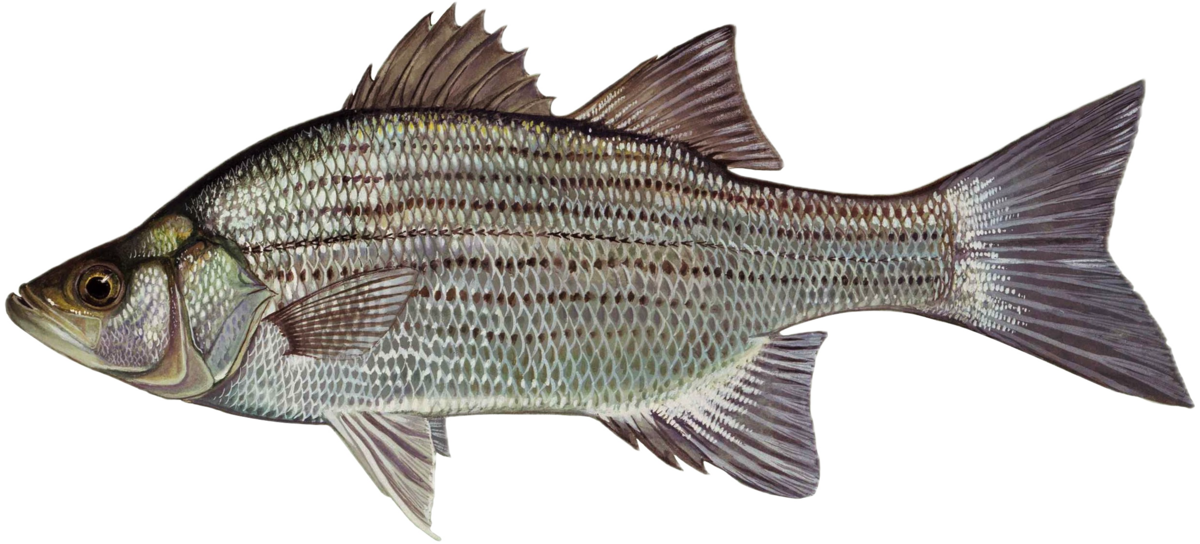
Largemouth Bass, white, Crappie
Best bet Backs of creeks, grass edges, bait migrations
Loading…
Updated 4:48 PM ET · Dock station at TRM 559.5Full live conditions →
Water, air, and wind from the dock sensor. Lake level, generation, and outflow from TVA telemetry. No forecasts.
Where they live by season
| Season | Depth | Where |
|---|---|---|
| Winter | 15–40 ft | Main-river channel, deep bends, holes |
| Pre-spawn | 10–30 ft | Drifting river channels and edges |
| Spawn (June) | 3–15 ft near rocks | Rocky banks, cavities, hard structure |
| Post-spawn | 10–30 ft | Return to river routes |
| Summer | 10–35 ft day, shallower late | Mid-lake to upper-river drifts |
| Fall | 10–35 ft | Main river, bends, flats near channel |
If you had one day
- Drift main-river channel edges with fresh cut bait until you find a productive depth band.
- If light, slow the drift or anchor on an outside bend or channel drop.
- At dusk in June, add rocky-bank stops for spawning fish.
- On mixed-species family trips, catfish are the most forgiving fallback when other patterns get weird.
Bait matrix
| Condition | Bait | Notes |
|---|---|---|
| Spring channel drift | Shad, bluegill, shrimp, chicken parts | Directly documented by TWRA |
| June spawning period | Catalpa worms, rocky-area presentations | Directly documented by TWRA |
| Big-river blues | Fresh cut shad / skipjack | Best for size on drift or anchor |
| Mixed-species family trip | Chicken, shrimp, small cut bait | Most forgiving option |
Fish-consumption note
Identification and biology
Three species in Watts Bar.
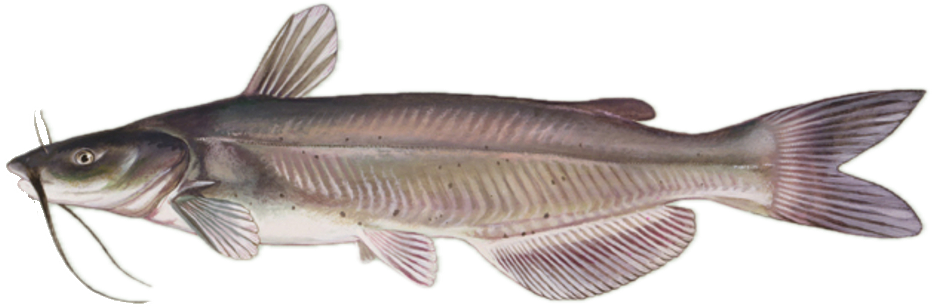
Channel catfish (Ictalurus punctatus). Other names: channels, fiddler, willow cat, spotted catfish, forked-tail cat. Younger fish have dark spots along the sides; adults lose them. Anal fin has 25 to 29 rays. Smooth, deeply forked tail. The official Tennessee state commercial fish. Average TN reservoir harvest: 16 inches; range 10 to 38 inches. State record: 41 lbs.
Blue catfish (Ictalurus furcatus). Other names: white cat, blue channel, Mississippi cat, Fulton cat. Heavy-bodied, blue-gray, with a dorsal hump. The defining ID feature is anal-fin ray count: 30 to 36 rays in blue catfish vs. 25 to 29 in channel catfish. The largest catfish species in the system; the most-harvested by Watts Bar anglers. Look for them in deep chutes and pools with current. Average TN reservoir harvest: 18 inches; range 14 to 45 inches. State record: 112 lbs.
Flathead catfish (Pylodictis olivaris). Other names: shovelnose cat, yellow cat, mud cat, shovelhead cat, Appaloosa cat, bluff cat. Distinctive flat head, mottled brown-and-yellow body, square-ish tail (not forked). Lives in deep current-scoured holes: eddies adjacent to bridge pilings, dam tailraces, the deep outside of channel bends. Diet is almost entirely live fish (gizzard shad, drum, carp, channel catfish, bullheads, bluegill). Average TN harvest: 18 inches; range 12 to 40 inches. State record: 85 lbs 15 oz.
Watch the spines. All three catfish species have sharp spines on the dorsal fin and the two pectoral fins (sides, behind the head) that lock into an upright position when the fish is stressed. The spines puncture skin easily and the wound stings for hours. The safe grip is from behind: come over the top of the fish from behind the gills, palm on the head, fingers and thumb behind the spines.
Records and recognition
- Tennessee state records: Channel 41 lbs · Blue 112 lbs · Flathead 85 lbs 15 oz.
- TARP qualifying lengths: Channel 28 inches · Blue 36 inches · Flathead 36 inches.
- Watts Bar limits: No limit on catfish 34 inches or under. Only 1 catfish over 34 inches per day. No commercial fishing on Watts Bar (unlike Chickamauga), which keeps the catfish population strong year-round.
Live conditions
Today's water temperature, dam generation status, weather, and wind are on the homepage, measured every minute at Tennessee River Mile 559.5. Use those to time the trip. Bass spawn windows are temperature-driven, current-bite patterns are generation-driven, and clarity changes after storm runoff.
Frequently Asked Questions
When is the best time of year for catfish on Watts Bar Lake?
Year-round, but spring channel drift (March through May) and early summer around rocky spawning habitat (June) are the two most productive windows. Midsummer to winter, drift the main river channel mid-lake up toward Fort Loudoun. Catfish are the most forgiving fallback when other patterns shut down.
What gear works for catfish on Watts Bar?
Fresh cut shad or skipjack for blue catfish on drifts and anchored bends. Chicken, shrimp, and worms for channel cats and family trips. Catalpa worms on rocky banks in June during the spawn period. Heavy weight to hold bottom in current.
More species