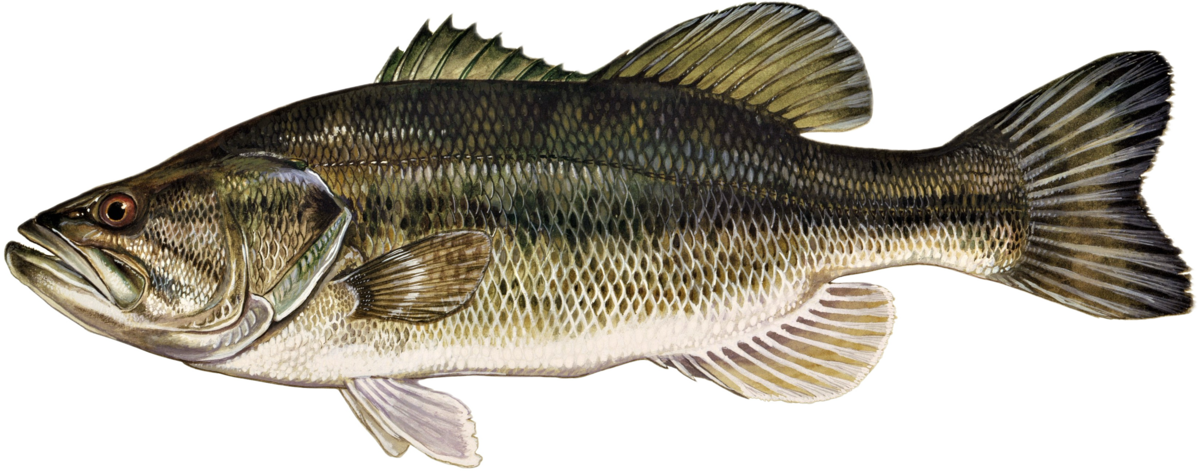
Largemouth Bass on Watts Bar Lake
TWRA reports higher-than-average spring electrofishing rates and angler-survey averages over 2.5 lb. Mid-lake mixed cover is the default: brush, grass, docks, laydowns, and 8 to 18 ft transitional depth.
Biting now
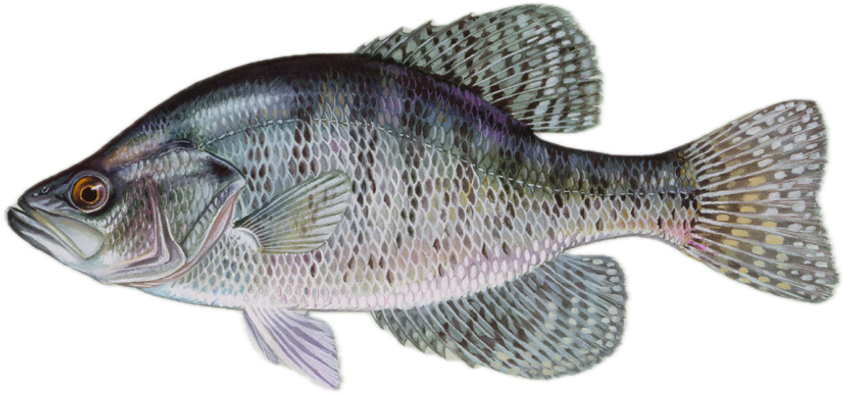
Largemouth Bass, white, Crappie
Best bet Backs of creeks, grass edges, bait migrations
Loading…
Updated 4:48 PM ET · Dock station at TRM 559.5Full live conditions →
Water, air, and wind from the dock sensor. Lake level, generation, and outflow from TVA telemetry. No forecasts.
Where they live by season
| Season | Depth | Where | How they feed |
|---|---|---|---|
| Winter | 10–30 ft | Lower-lake steep banks, channel-adjacent breaks | Suspended on shad windows |
| Pre-spawn | 4–12 ft | Primary/secondary points, channel swings in big creeks, isolated laydowns | Shad + craw, migration-route feeding |
| Spawn (68–72°F) | 1–6 ft | Shallow wood, docks, rock pockets, flats with cover | Territorial, bed-related |
| Post-spawn | 3–12 ft early, 8–18 ft later | Shad-spawn banks, first break, docks, brush | Shad-focused, short windows |
| Summer | 10–25 ft day; shallow at night | Main-river points, breaks, offshore cover, docks, shade | Current and bait-position dependent |
| Fall | 2–10 ft | Creek backs, grass edges, laydowns, flats near bait | Chasing shad in concentrated zones |
Watts Bar–specific patterns
- Mid-lake is the default. Recent public coverage describes it as full of 2- to 4-pound largemouth.
- Spring tournament patterns repeatedly involve isolated mid-lake laydowns and offshore wood near Tom Fuller Park (6–10 ft). See MLF coverage.
- Early June can stay shallow longer than expected. KVD publicly fished docks, laydowns, and milfoil instead of offshore.
- Florida-strain stocking sites (per TWRA): Piney embayment at Rhea Springs, Big Springs in Meigs County, and Caney Creek.
If you had one day
- Start in a mid-lake creek with a shad-spawn or transitional-bank plan.
- First hour: cover grass edges, isolated laydowns, and docks with a white bladed jig or spinnerbait.
- Mid-morning: move to brush, first breaks, and mixed grass/brush with a drop-shot, worm, or jig.
- Afternoon: skip shade on docks or flip isolated wood in pockets.
- If TVA pulls current, weight channel-adjacent cover; if not, weight shade and brush.
Lure matrix
| Condition | Bait | Color |
|---|---|---|
| Prespawn, moderate clarity | Suspended jerkbait, lipless crank | Translucent shad clear; white/chartreuse dingy |
| Wood/laydowns | Spinnerbait, bladed jig, jig | White/blue for shad; black/blue dirty |
| Spawn | Weightless worm, Texas-rig creature, tube | Green pumpkin, watermelon, white |
| Offshore summer | Carolina rig, deep crank, flutter spoon | Plum, green pumpkin, citrus shad, sexy shad |
| Fall grass | Spinnerbait, buzzbait, squarebill, chatterbait | White/shad clean; chartreuse-back stained |
Identification and biology
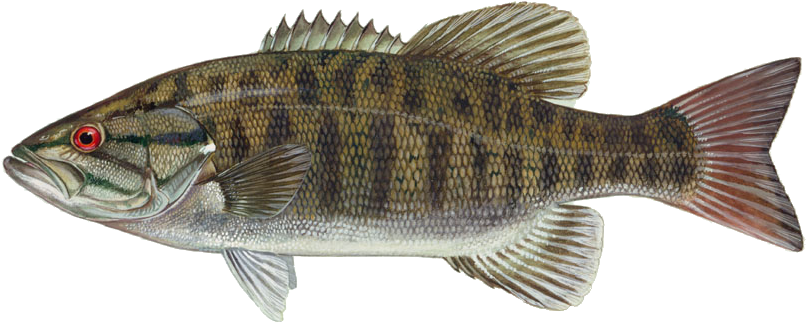
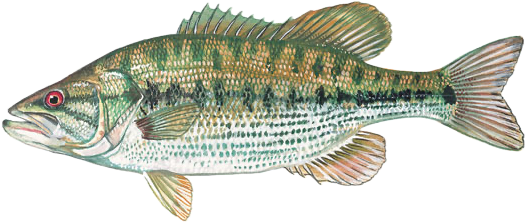
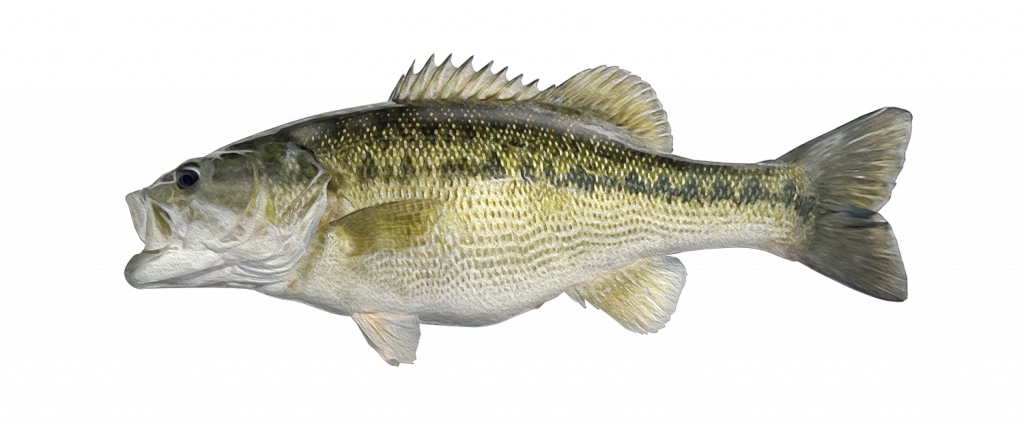
Micropterus salmoides. Other names: bigmouth bass, bucketmouth, green trout. The defining ID feature is the upper jaw, which extends past the back edge of the eye when the mouth is closed. (Smallmouth and spotted bass jaws stop at or before the eye.) Body is olive-green on the back with a white belly and a dark, blotchy horizontal stripe down each side.
Two subspecies are present in Tennessee: the Northern largemouth, native to most of the state, and the Florida largemouth (M. salmoides floridanus), stocked in Tennessee for about 20 years to push average size up. On Watts Bar specifically, TWRA began Florida-strain stocking in 2015 in Piney embayment at Rhea Springs, Big Springs in Meigs County, and Caney Creek. Genetic testing is required to distinguish the two subspecies; they look nearly identical.
Diet shifts with age: insects as fry, then crayfish, frogs, minnows, sunfish, shad, and even mice or small snakes as adults. Spawn begins when water temps approach 62 to 65 °F. Average harvest size from Tennessee reservoirs is around 15 inches; range 8 to 24 inches.
Records and recognition
- Tennessee state record: 15 lbs 3 oz, a Northern/Florida hybrid that was 12 years old at catch.
- TARP qualifying length: 22 inches. A largemouth at or above this size can be submitted to the Tennessee Angler Recognition Program for a Trophy Fish Certificate.
- Watts Bar minimum length: 15 inches (the statewide rule has no length minimum; Watts Bar overrides). Daily creel: 5 black bass total, combining largemouth, smallmouth, spotted, Alabama, and Coosa.
Live conditions
Today's water temperature, dam generation status, weather, and wind are on the homepage, measured every minute at Tennessee River Mile 559.5. Use those to time the trip. Bass spawn windows are temperature-driven, current-bite patterns are generation-driven, and clarity changes after storm runoff.
Frequently Asked Questions
When is the best time of year for largemouth bass on Watts Bar Lake?
Pre-spawn (March to mid-April) and spring post-spawn (May) are the two strongest windows. Water temperature from 58 to 72°F triggers the most active shallow-water feeding. Fall, when shad concentrate in creek backs, is the second-best window. Summer midday bite is slow; the best summer fishing happens early morning or at night.
What lures work best for largemouth on Watts Bar Lake?
Spinnerbaits and bladed jigs through wood and grass in prespawn. Texas-rig worms and tubes on beds during spawn. Drop-shots and Carolina rigs on offshore brush and breaks in summer. Crankbaits and swimbaits through grass and wood in fall. Color tip: white or blue for clear water, chartreuse or black-blue for stained.
More species