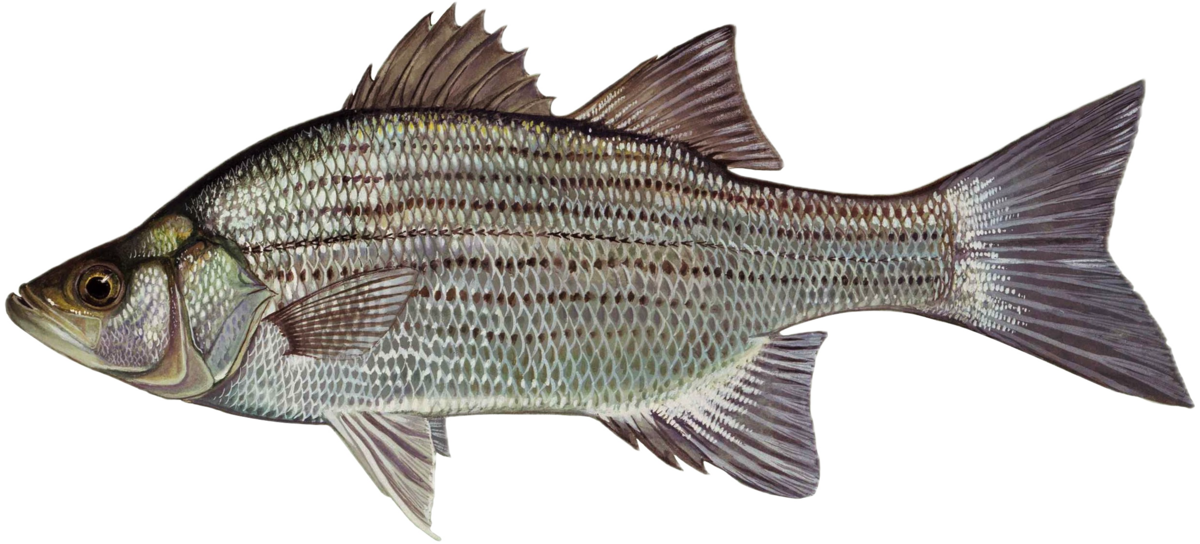
Crappie on Watts Bar Lake
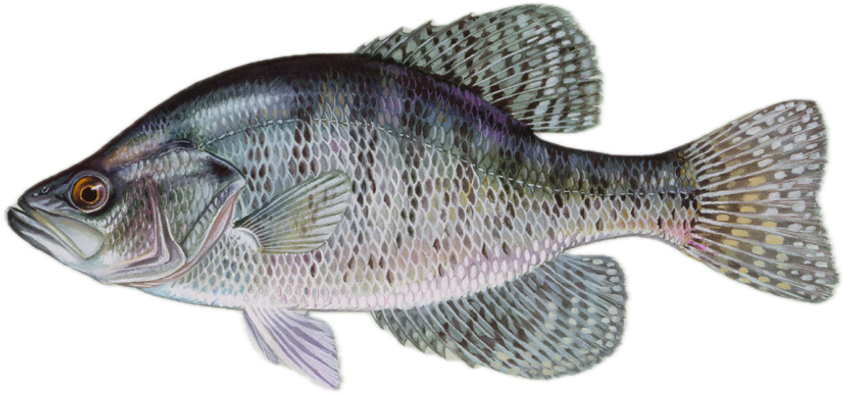
Per TWRA, both black and white crappie are present in roughly even harvest numbers. Spawning success has been inconsistent because of delayed fills and sudden pool changes; black and blacknose stocks have been added to augment spawns.
Biting now
Largemouth Bass, white, Crappie
Best bet Backs of creeks, grass edges, bait migrations
Loading…
Updated 4:48 PM ET · Dock station at TRM 559.5Full live conditions →
Water, air, and wind from the dock sensor. Lake level, generation, and outflow from TVA telemetry. No forecasts.
Where they live by season
| Season | Depth | Where |
|---|---|---|
| Winter | 12–30 ft | Ditches, creek channels, deep docks, brush |
| Pre-spawn | 8–18 ft → 3–8 ft | Back halves of creeks, staging at slough mouths |
| Spawn (60–68°F) | 1–6 ft | Bushes, laydowns, docks, visible cover |
| Post-spawn | 8–20 ft | Deep docks, offshore brush, first break |
| Summer day | 12–25 ft | Deep bluffs, brush piles |
| Summer night | — | Lit docks, deep bluffs |
| Fall | 8–18 ft | Shaded docks, brush, channel edges |
If you had one day
- Start in a major creek scanning side-imaging for brush, dock posts, isolated cover in 10–20 ft.
- If surface temp is in the low 60s, slide shallower toward the backs of bays and visible wood.
- Carry two rigs only: jig/minnow vertical setup, plus a swim/casting jig for brush and humps.
- If daytime slows in summer, stay for the light bite after dark on bluff and dock lights.
Lure matrix
| Condition | Bait | Color |
|---|---|---|
| Confidence default | Live minnow on jig or plain hook | Natural |
| Clear water | Small paddle-tail, hair jig, subtle tube | Pearl, monkey-milk, natural shad |
| Stained water | Tube, curly tail, slab jig | Chartreuse/white, black/chartreuse |
| Brush over 10 ft | Underspin, swim jig, jig+minnow | White, pearl, light shad |
Known issue
Identification and biology
Two species, both in genus Pomoxis (Greek "sharp cover," a reference to the spiny gill cover). Other names across both species: papermouth, calico bass, slab, speck, speckled perch, sac-a-lait. The "papermouth" name describes the thin tissue around the mouth that tears easily on a hard hookset.
To distinguish black from white crappie: count the spines at the front of the dorsal fin. White crappie has 5 to 6 spines plus distinctive dark vertical bars on the body. Black crappie has 7 to 8 spines plus irregular dark speckles. Note: white crappie males darken during spawning and are sometimes mistaken for black crappie; the spine count still tells you.
Black crappie (Pomoxis nigromaculatus) prefer quiet warm waters with vegetation and sandy or muddy bottoms. Less common than white crappie statewide. State record: 4 lbs 4 oz.
White crappie (Pomoxis annularis) tolerate muddy water better than black; common in slow-moving rivers and small to large reservoirs. State record: 5 lbs 1 oz.
Blacknose crappie is a genetic variation of black crappie with a distinctive black stripe from the dorsal fin to the nose. Not a hybrid or subspecies. Naturally occurs in West Tennessee, stocked elsewhere since the late 1980s. TWRA has stocked blacknose into Watts Bar to augment crappie spawning success when pool-level conditions disrupt natural reproduction.
Diet for both species: insects, freshwater shrimp, amphipods, and small fish. Average TN reservoir harvest is around 11 inches; range 6 to 14 inches.
Records and recognition
- Tennessee state record (white crappie): 5 lbs 1 oz.
- Tennessee state record (black crappie): 4 lbs 4 oz.
- TARP qualifying length: 14 inches (either species). A 14-inch crappie on Watts Bar is a real "wow" fish locally.
- Watts Bar limits: 15 per day combined (black + white + hybrid); 10-inch minimum length.
Live conditions
Today's water temperature, dam generation status, weather, and wind are on the homepage, measured every minute at Tennessee River Mile 559.5. Use those to time the trip. Bass spawn windows are temperature-driven, current-bite patterns are generation-driven, and clarity changes after storm runoff.
Frequently Asked Questions
When is the best time of year for crappie on Watts Bar Lake?
The spring spawn (roughly late March through early May at 60 to 68°F) is the most accessible window. Crappie move shallow into bushes, docks, and visible cover. Summer through fall, fish move to 12 to 25 ft on deep docks and brush piles. Night fishing on lit docks and bluffs can be productive from June through August.
What gear works for crappie on Watts Bar?
Live minnows on a jig or plain hook are the confidence default. Small paddle-tail swimbaits and hair jigs in clear water. Tube jigs and slab jigs in stained water. Vertical jigging with an underspin or swim jig over deep brush piles in summer.
More species