Alabama Bass on Watts Bar Lake
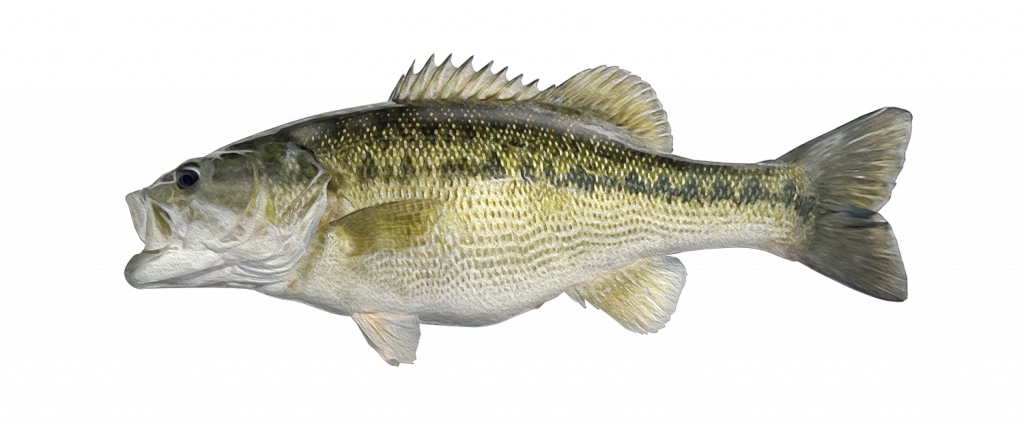
Alabama bass (Micropterus henshalli) are an invasive black bass species confirmed in Watts Bar's White's Creek embayment. They were illegally introduced, hybridize with native smallmouth, and threaten to permanently change the lake's bass fishery if their range expands. Watts Bar anglers should learn to identify them and consider keeping any they catch.
Biting now
Largemouth Bass, white, Crappie
Best bet Backs of creeks, grass edges, bait migrations
Loading…
Updated 11:58 AM ET · Dock station at TRM 559.5Full live conditions →
Water, air, and wind from the dock sensor. Lake level, generation, and outflow from TVA telemetry. No forecasts.
Identification and biology
Micropterus henshalli. Other names: Alabama spot, Alabama spotted bass. Until 2011 the Alabama bass was considered a subspecies of the spotted bass (Micropterus punctulatus henshalli). The American Fisheries Society recognized it as a separate species that year based on genetic evidence.
Native to the Alabama / Mobile River drainage. Not native to any Tennessee waters. Believed to have been illegally stocked into the Parksville Lake / Ocoee River watershed by anglers; the population has since extended west toward the Tennessee River and into Watts Bar Reservoir, where TWRA has confirmed presence in the White's Creek embayment.
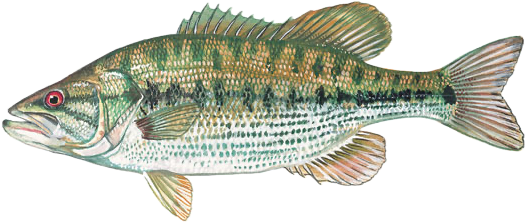
Visually nearly identical to the native spotted bass (jaw stops at or before the eye, dark spots below the lateral line). Slight differences in scale patterns near the lateral line and overall body proportions exist but are unreliable for field ID. Habitat preference also overlaps: flowing water, clay-gravel bottoms, deeper water, off-shoreline structure. The reliable difference is size: Alabama bass commonly exceed 4.5 lbs and the Tennessee state record is 7 lbs, both larger than spotted bass typically reach in Tennessee waters.
Where they live on Watts Bar
White's Creek embayment is the only TWRA-confirmed location on Watts Bar at present. The embayment is a major creek arm on the lower-mid reservoir near the dam, historically known for crappie brush and fall striper starts, and now also a flag for invasive bass.
Beyond the confirmed location: any rocky, deeper-water, off-shoreline habitat in the lower and mid lake should be considered possible Alabama bass territory, given how rapidly the species has spread elsewhere in the Tennessee River system.
Why they matter for Watts Bar's fishery
Three documented impacts on Watts Bar.
- Hybridization with smallmouth bass. Alabama × smallmouth hybrids have been documented in Watts Bar, Fort Loudoun, and Tellico. Hybridization dilutes the smallmouth gene pool and reduces the long-term viability of the native smallmouth fishery, which is one of Watts Bar's signature draws.
- Displacement of native spotted bass. TWRA reports that spotted bass catch rates on Watts Bar have collapsed to nearly non-existent in historically occupied areas. Alabama bass competition and hybridization are believed to be a significant cause.
- Range expansion concern. The illegal-stocking pattern that brought Alabama bass to Tennessee in the first place can repeat on Watts Bar. TWRA explicitly prohibits live transport of fish between water bodies, but enforcement relies on angler compliance.
Tournament organizations on the Tennessee River have begun to pay attention to Alabama bass identification at weigh-ins, since hybridization can make species ID at the scales unreliable. For Watts Bar tournament anglers, the safest practice is to follow the smallmouth size limit on any spotted-or-Alabama bass when in doubt.
If you catch one
- If it looks like a spotted bass and you caught it in or near White's Creek, assume it could be an Alabama bass.
- You can keep it. The standard Watts Bar 5 black bass per day creel and 15-inch minimum length both apply.
- If you don't want to eat it, the most ecologically sound move is to dispatch it on the bank rather than release it back into the lake.
- Do not transport live to any other water body. This is illegal under TWRA live-fish transport rules.
- If you catch what you suspect is an Alabama-smallmouth hybrid (it looks like a smallmouth but with spotted-bass color elements, or vice versa), follow the more restrictive smallmouth rules to stay legal.
- Optional: report unusual catches via the TWRA Region 3 office (931-484-9571) so management has data on range expansion.
Records and recognition
- Tennessee state record (Alabama bass): 7 lbs.
- TARP qualifying length: Not separately listed; spotted bass listing of 18 inches is the closest equivalent.
- Watts Bar limits: Counts toward the 5 black bass per day combined creel; 15-inch minimum applies. No special invasive-species bag exemption.
Live conditions
Today's water temperature, dam generation status, weather, and wind are on the homepage, measured every minute at Tennessee River Mile 559.5. Use those to time the trip. Bass spawn windows are temperature-driven, current-bite patterns are generation-driven, and clarity changes after storm runoff.
Frequently Asked Questions
Why are Alabama bass a problem on Watts Bar?
Two reasons. First, they hybridize with native smallmouth and spotted bass, diluting both gene pools. Hybridization between Alabama and smallmouth has been documented in Watts Bar, Fort Loudoun, and Tellico reservoirs in the Tennessee River system. Second, they outcompete native spotted bass for habitat and forage, which is part of why TWRA reports spotted-bass catch rates have collapsed to nearly non-existent in historically occupied areas of Watts Bar. Confirmed presence in White's Creek embayment is the main documented Watts Bar location, but they have likely spread.
How do I tell an Alabama bass from a spotted bass?
You can't reliably tell visually; TWRA notes that genetic testing is the only definitive way. Both species have the upper jaw stopping at or before the eye, both have rows of small dark spots below the lateral line, and both prefer rocky areas. Alabama bass tend to grow larger (commonly over 4.5 lbs vs 2 lbs typical for native spotted bass on Watts Bar) and have slightly different scale patterns. On Watts Bar, treat any spotted-looking bass in or near White's Creek as likely an Alabama bass.
Should I keep Alabama bass if I catch one?
Yes if you want to. Alabama bass are not a protected species in Tennessee and there's no special bag limit. The standard Watts Bar 5 black bass per day creel and 15-inch minimum length both apply. TWRA does not require harvest, but reducing the population helps native smallmouth and spotted bass. If you don't want to keep it, kill it on the bank before disposal rather than releasing it back into the lake.
Can I move an Alabama bass to another lake?
No. TWRA prohibits transporting any live fish, crayfish, or salamanders between water bodies. The Parksville Reservoir watershed (the original illegal introduction point) has an explicit rule prohibiting live transport of any black bass off the reservoir for exactly this reason.
More species