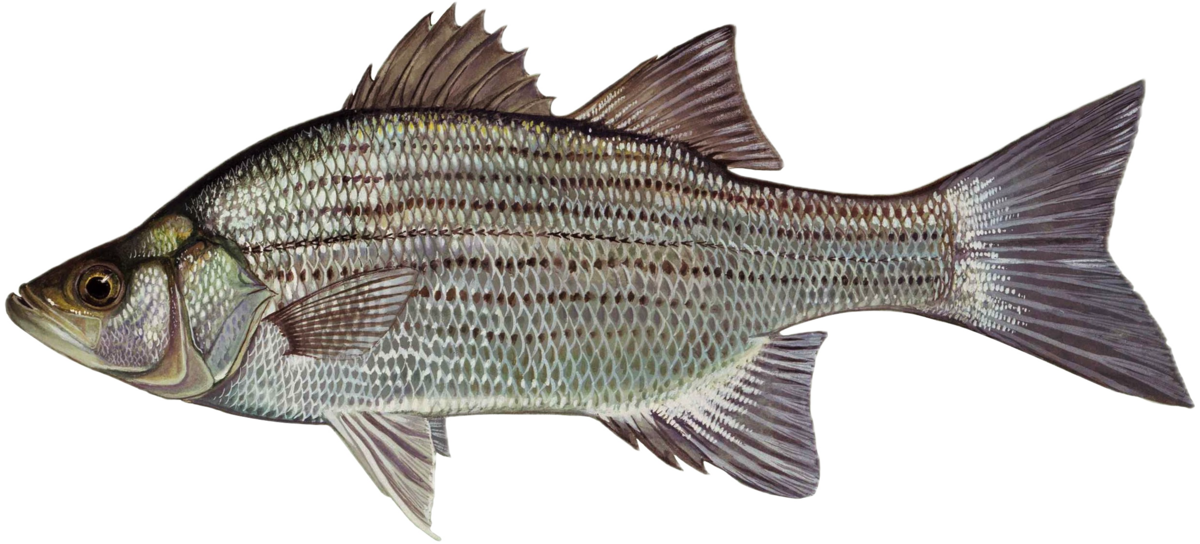
Walleye on Watts Bar Lake
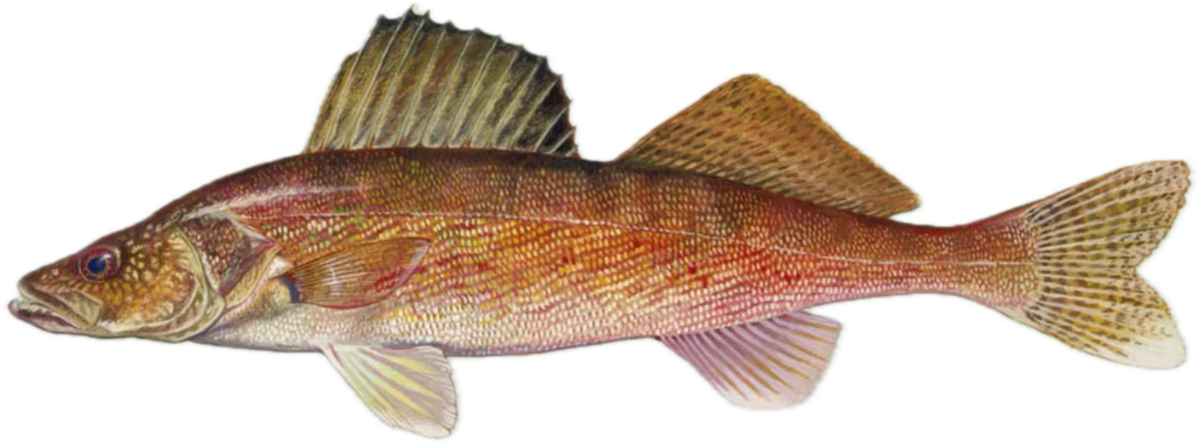
TWRA has stocked walleye on Watts Bar annually since 2011 as part of an active rebuilding program. The fishery is improving but remains lower-density than legacy walleye reservoirs like Center Hill or Norris. Best targeted below Fort Loudoun Dam in cold-water months.
Biting now
Largemouth Bass, white, Crappie
Best bet Backs of creeks, grass edges, bait migrations
Loading…
Updated 11:44 AM ET · Dock station at TRM 559.5Full live conditions →
Water, air, and wind from the dock sensor. Lake level, generation, and outflow from TVA telemetry. No forecasts.
Identification and biology
Sander vitreum. Other names: walleyed pike, jackfish, jack salmon, jack, pike perch, blue pike, glass-eye. Distinctive cloudy-white eye that reflects light (the source of "glass-eye" and "walleye"), olive-yellow body with darker mottling, deeply forked tail. The lower lobe of the tail (caudal fin) has a distinct white tip; the spiny dorsal fin has a black spot at the rear base. Both are key field-ID features for distinguishing walleye from sauger.
Walleye prefer large, clear, deep streams, rivers, and reservoirs. They tolerate water from 32 to 90°F but thrive in cooler water with maximum temperatures around 77°F. Diet is almost entirely fish: shad, sculpins, suckers, sunfish, shiners.
Watts Bar walleye are stocked, not naturally reproducing in significant numbers. The 2011 stocking program is part of a broader Tennessee effort to rebuild walleye in main-stem reservoirs (also stocked: Cheatham, Chickamauga, Fort Patrick Henry, Normandy, Old Hickory). Native walleye populations exist in Center Hill, Cherokee, Dale Hollow, Norris, South Holston, Tellico, Tims Ford, and Watauga reservoirs.
Average TN harvest: 18 inches; range 14 to 28 inches. The Tennessee state record (and world record) walleye is 25 lbs.
Where they live by season
| Season | Depth | Where |
|---|---|---|
| Winter | 15–35 ft | Below Fort Loudoun Dam tailwater, deep main-channel holes |
| Pre-spawn (40°F) | 10–25 ft | Tailwater current breaks, gravel runs upstream of the dam |
| Spawn (40–50°F) | 2–10 ft | Gravel/rubble bars in upper river, tributary mouths |
| Post-spawn | 10–25 ft | Returning to main-channel structure, deeper banks |
| Summer | 20–40 ft | Deep main-channel structure, thermocline edges |
| Fall | 15–30 ft | Cooling-water transitional zones, points with deep access |
Watts Bar–specific patterns
- Below Fort Loudoun Dam is the primary public-access fishery, especially in winter and early spring. TVA generation moves shad through the tailwater and walleye stage on current breaks.
- The Interstate 75 bridge at the upper end of the lake marks roughly the downstream extent of the consistent winter walleye fishery.
- Browder Shoals area is referenced by TWRA as productive sauger water; sauger and walleye overlap, so this is also possible walleye territory in cold months.
- Aerated dam releases (TVA's Reservoir Release Improvement Program, late 1990s) keep dissolved oxygen high enough below dams that walleye stay catchable in summer current.
If you had one day
- Launch above the I-75 bridge or fish from the Fort Loudoun tailwater bank.
- Vertical-jig a heavy chartreuse or orange jig tipped with a live minnow, in 12 to 25 ft on current breaks.
- Fish dawn and the last hour before dark; midday bites are slow.
- If TVA isn't generating, walleye scatter and the bite tightens dramatically. Check generation before you go.
Lure matrix
| Condition | Bait | Color |
|---|---|---|
| Tailwater current | Heavy jig + live minnow vertical | Chartreuse, orange, fire tiger |
| Cold deep main channel | Blade bait, jigging spoon | White, chrome, gold |
| Spawn-period gravel | Live shiner on bottom rig | Natural |
| Slow midday bite | Downsize to lighter jig | Subtle natural |
Records and recognition
- Tennessee state record (also the world record): 25 lbs.
- TARP qualifying length: 28 inches.
- Watts Bar limits: 5 per day, 16-inch minimum length.
- Sauger note: Sauger (Sander canadensis) is the close cousin, found below the same dams and around river islands. Distinguish by the spiny dorsal fin: sauger has distinct black spots, walleye has a single black blotch. Sauger limit is 10 per day, 15-inch minimum. TWRA shifted focus to walleye stocking around 2011, and sauger natural reproduction in Watts Bar has been inconsistent.
Live conditions
Today's water temperature, dam generation status, weather, and wind are on the homepage, measured every minute at Tennessee River Mile 559.5. Use those to time the trip. Bass spawn windows are temperature-driven, current-bite patterns are generation-driven, and clarity changes after storm runoff.
Frequently Asked Questions
When is the best time of year for walleye on Watts Bar Lake?
December through early April. Walleye spawn in the 40 to 50°F range in February and March, then scatter as water warms. The cold-water tailwater fishery below Fort Loudoun Dam is the most accessible window. Summer walleye go deep and become hard to target without sonar.
Where do walleye live on Watts Bar?
Below Fort Loudoun Dam is the primary recreational zone, especially when TVA is generating and current concentrates baitfish. Beyond that, walleye scatter to deep main-channel structure in the upper Tennessee River reach. They prefer cool, deep, clear water and tolerate temperature extremes from 32 to 90°F but thrive around 60 to 77°F.
What's the orange-tag walleye program?
The University of Tennessee is conducting an acoustic-tag study on Watts Bar walleye to track movement and habitat use. Some study fish carry external orange tags. If you catch a tagged walleye, TWRA asks anglers to record the tag number, the date and location of catch, length and weight, and either release the fish or note the disposition. Reports help TWRA refine stocking strategy.
More species