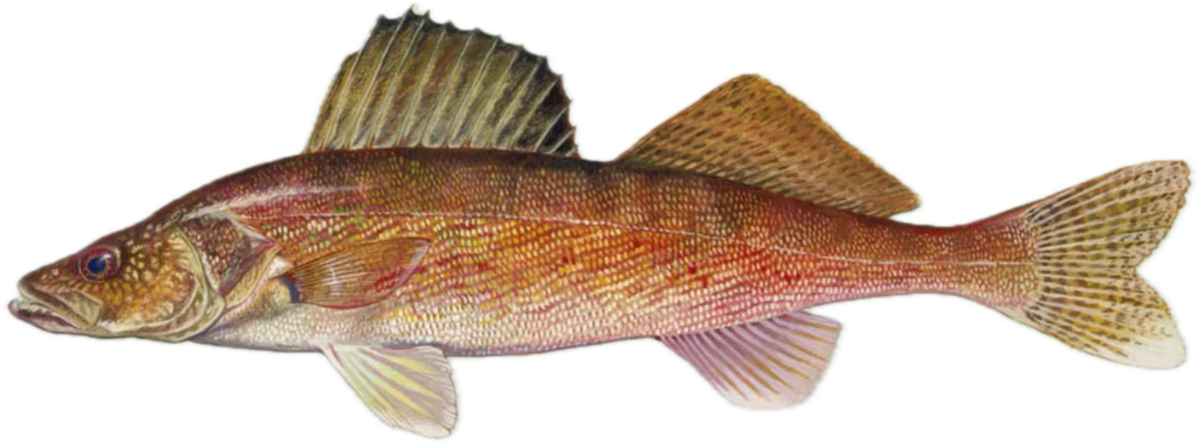
White Bass on Watts Bar Lake
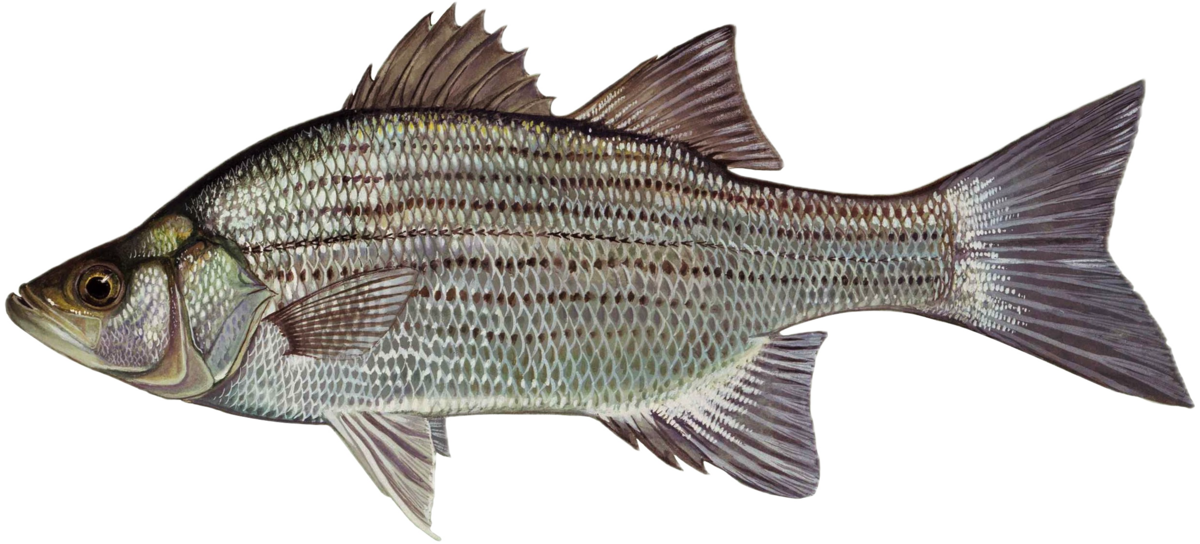
TWRA reports white bass spawn at 54-68°F in spring. The signature pattern is summer-evening surface "jumps" where schools chase shad to the top, often near the upper reservoir and dam areas. The fall and winter bite holds in tailwater current and on flats off the main river channel.
Biting now
Largemouth Bass, white, Crappie
Best bet Backs of creeks, grass edges, bait migrations
Loading…
Updated 11:44 AM ET · Dock station at TRM 559.5Full live conditions →
Water, air, and wind from the dock sensor. Lake level, generation, and outflow from TVA telemetry. No forecasts.
Identification and biology
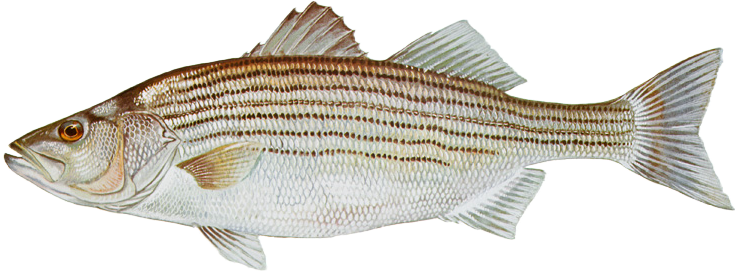
Morone chrysops. Other names: stripe, stripe bass, sand bass, silver bass. Open-water schooling fish, common throughout Tennessee's mainstream reservoirs. Identified by the silvery body with horizontal dark stripes, deep humped back, and two soft dorsal fins that connect.
Distinguishing features: stripes are broken (don't run continuously from gills to tail like a striped bass). Body is shorter and chunkier than a striper. Inside the mouth there is one tooth patch on the tongue (stripers have two). Hybrid Cherokee bass (white × striped) are intermediate in size and stripe continuity.
White bass run upstream to spawn when water temperatures hit 50 to 55°F, typically March on Watts Bar. They concentrate at the upstream end of the reservoir and below Fort Loudoun and Melton Hill dams during the run. Unlike stripers, they spawn successfully in TN reservoirs and don't depend on hatchery support.
Diet: almost exclusively small fish, primarily threadfin and gizzard shad. Adults feed in open-water schools, herding bait toward the surface and creating the visible "jumps" that define summer white-bass fishing.
Average TN reservoir harvest: 12 inches; range 8 to 18 inches. The Tennessee state record is 5 lbs 10 oz.
Where they live by season
| Season | Depth | Where |
|---|---|---|
| Winter | 15-30 ft | Main river channel below dams, deep wintering schools |
| Pre-spawn (45-50°F) | 10-25 ft | Staging at upper-reservoir flats, Kingston area |
| Spawn (50-55°F) | 2-15 ft | Upstream movement to Fort Loudoun and Melton Hill tailwaters; gravel runs |
| Post-spawn | 5-20 ft | Returning downstream, schools scattering to main reservoir |
| Summer | 0-20 ft (chasing bait) | Open-water schools chasing shad; surface jumps at dawn/dusk |
| Fall | 5-25 ft | Channel-edge flats, points where shad migrate, tailwater current |
Watts Bar–specific patterns
- Spring run at Fort Loudoun and Melton Hill tailwaters is the big-fish window. Use small jigs, jerkbaits, and inline spinners on current breaks below the dams.
- Summer evening jumps in the upper reservoir near Kingston. Watch for surface disturbance and bird activity at dawn and the last hour before dark.
- Fall main-channel flats hold schools as shad migrate. Drift or troll along channel edges from mid-lake up toward Fort Loudoun.
- White bass overlap with striped bass in many of the same locations, especially in summer. Live shad on planer boards catches both species.
If you had one day
- If it is spring (water 50 to 55°F), launch near Kingston and fish the upper river up toward Fort Loudoun. Cast small jigs and jerkbaits into current breaks.
- If it is midsummer, plan for a dawn or dusk session in the upper reservoir. Cut the motor early at any sign of surface activity. Cast a spoon or small topwater at the first boil; reload and cast again before the school sinks.
- If you cannot find surface activity, drift main-channel flats in 10 to 20 ft with a small jig + minnow. White bass are nearly always somewhere in the column when not on top.
- Fall: troll the channel edges from mid-lake upstream with small crankbaits. White bass schools are easy to mark on sonar in fall.
Lure matrix
| Condition | Bait | Color |
|---|---|---|
| Spring tailwater current | 1/8 to 1/4 oz jig, jerkbait, inline spinner | White, chartreuse, shad |
| Surface jumps (summer) | Jigging spoon, small topwater, small swimbait | Chrome, white, pearl shad |
| Fall channel troll | Small crankbait (Bandit 100, small Shad Rap) | Sexy shad, chrome |
| Cold-water deep schools | Blade bait, jigging spoon | White, chrome |
| When the bite is slow | Live shad, live minnow on a slip-bobber | Natural |
Records and recognition
- Tennessee state record: 5 lbs 10 oz.
- TARP qualifying length: 18 inches (a true "big white" anywhere in TN).
- Watts Bar limits: 15 per day, no minimum length. Apply standard hook and possession rules. Full rules.
Live conditions
Today's water temperature, dam generation status, weather, and wind are on the homepage, measured every minute at Tennessee River Mile 559.5. Use those to time the trip. Bass spawn windows are temperature-driven, current-bite patterns are generation-driven, and clarity changes after storm runoff.
Frequently Asked Questions
When is the best time of year for white bass on Watts Bar Lake?
March through May during the spring spawning run, when whites move upstream to dam tailwaters. Late summer (July-August) for the evening shad-busting surface jumps. Fall (September-November) as schools chase migrating shad on flats off the main river channel. The bite slows in deep winter but tailwater fish remain accessible.
How do I find a white bass jump?
Watch the surface in the upper reservoir at dawn and dusk in midsummer through fall. A jump looks like rain on otherwise calm water: shad fleeing upward as a school of whites pushes them from below. Birds (gulls, terns) circling and diving on a specific spot are an even more reliable signal. Cut the motor 50 feet short and cast a small spoon, jig, or topwater into the boil immediately. The window is short, sometimes seconds.
What's the difference between white bass and striped bass?
White bass are smaller (typically 8 to 18 inches; 12-inch average) with a higher humped back, broken stripe pattern (lines don't run continuously to the tail), and a single tooth patch on the tongue. Striped bass are larger (often 20 to 40 inches), more streamlined, with continuous unbroken stripes from gills to tail, and two tooth patches on the tongue. Both school and chase shad; both can be caught at the same locations during summer jumps.
More species